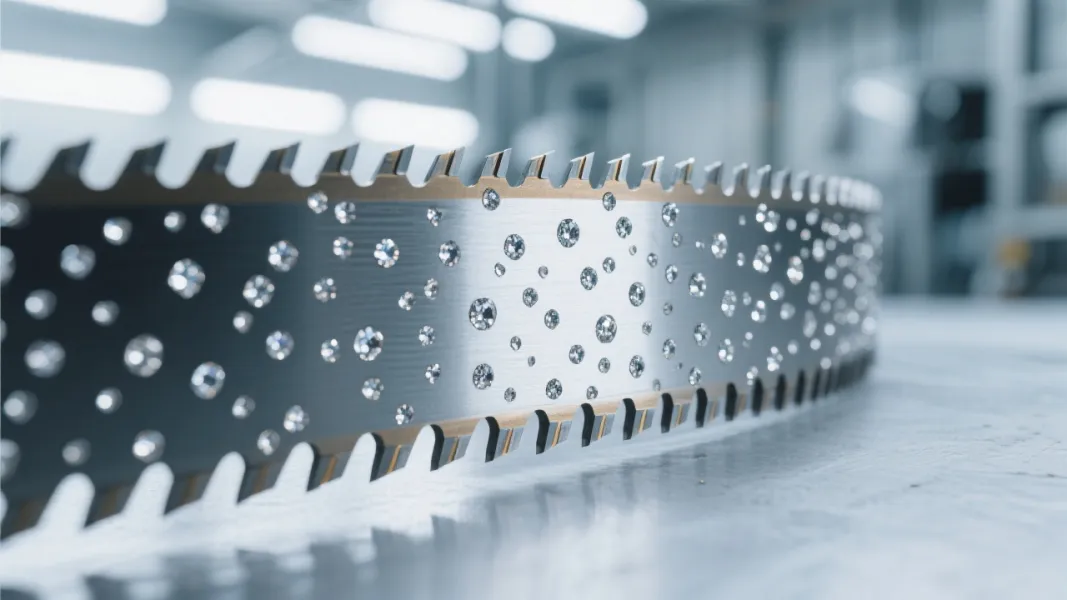
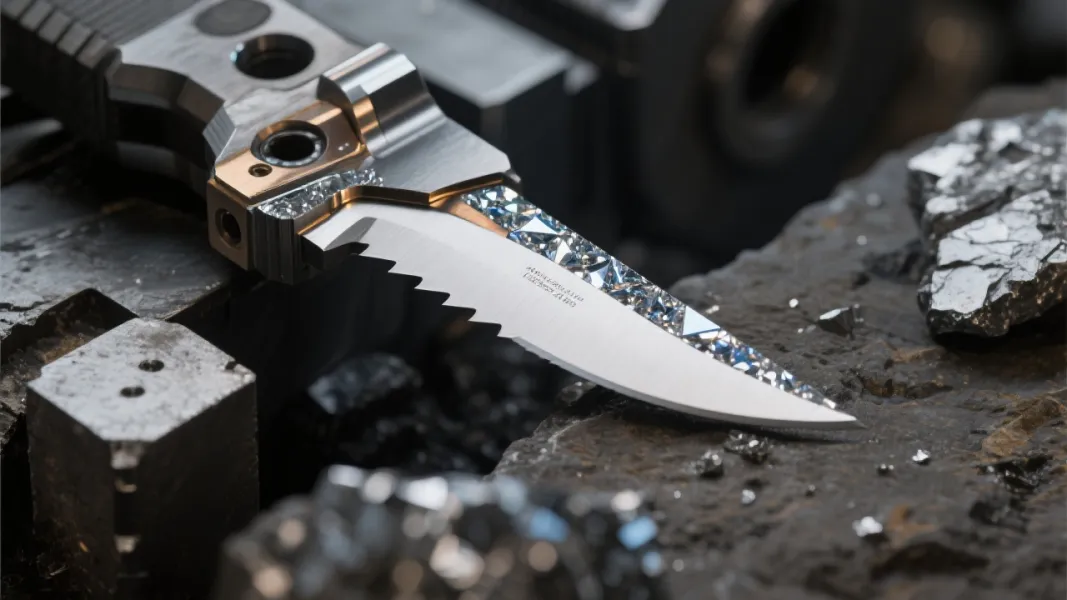
Brazed Diamond Saw Blade Maintenance Guide: Standard Practices to Extend Service Life and Improve Cutting Safety
2026/02/24
UHD
Tutorial Guide
This guide presents a standardized, field-ready approach to maintaining brazed diamond saw blades to extend service life, stabilize cutting quality, and strengthen operator safety. It covers practical daily routines—including correct cleaning methods, wear-pattern inspection, heat and cooling management, and proper storage conditions—while highlighting vibration control and noise-reduction practices to reduce overheating and mechanical fatigue. A Q&A-style troubleshooting section and visual step-by-step references improve on-site usability for industrial supervisors and frontline operators. The article also notes the value of professional technical support and after-sales service from UHD Superhard Material Tools Co., Ltd., helping users implement consistent maintenance standards and sustain efficient production.
Standardized Maintenance Guide for Brazed Diamond Saw Blades
In industrial cutting, a brazed diamond saw blade is often treated like a “consumable.” In practice, most premature failures come from avoidable habits: heat buildup, unstable feed, vibration, and storage damage. This guide lays out a repeatable maintenance routine—cleaning, wear checks, cooling management, and safe storage—so plant managers and operators can extend blade life, reduce downtime, and keep cut quality stable across shifts.
Why Brazed Diamond Blades Fail Early (and What Maintenance Actually Prevents)
Brazed diamond blades hold diamond grains with a brazing alloy. They can cut aggressively, but the same advantage makes them sensitive to overheating and mechanical shock. When temperatures and vibration rise, failure tends to cascade: grain micro-cracks → brazing fatigue → segment chipping → wobble → unsafe cutting.
Field Reference Metrics (use as on-site benchmarks)
Common “hidden” life loss: 15–30% from heat cycling and inconsistent cooling on long cuts.
Vibration-related damage can reduce usable life by 20–40% when flange alignment is off or RPM is mismatched.
Routine cleaning + inspection typically cuts unexpected blade failures by 25–35% in multi-shift operations.
Note: Actual results vary by material (stone/concrete/ceramic/FRP), cooling method, feed rate, and machine rigidity.
Daily Cleaning SOP (5–10 Minutes That Protects the Brazing)
Cleaning is not cosmetic. Slurry, resin, and fine abrasive dust can act like insulation, pushing temperatures higher and accelerating brazing fatigue. A short, standardized routine at the end of each shift keeps cutting consistent and prevents heat traps.
Step-by-step cleaning (non-negotiables)
Power down & lockout. Wait until the blade is cool to the touch (heat-soaked metal can burn and warp).
Dry brush first (nylon or brass brush) to remove loose dust from gullets and the core.
Wet wipe / mild detergent for resin or slurry film. Avoid aggressive solvents unless approved for your blade core/coating.
Rinse and dry fully. Moisture left on the core invites corrosion—corrosion pits can become stress risers at speed.
Final quick check: flange area clean, no packed debris near the arbor hole.
Wear Inspection: What to Check Before Every Shift
A brazed diamond saw blade should be inspected like a rotating safety component, not a simple accessory. A two-minute check often prevents a full shift of poor cuts—or worse, a sudden segment loss.
Clean; remove burrs; verify flange faces are clean and flat
Sound & feel during spin
New ringing, harsh noise, pulsing contact
Hidden cracks, loose mounting, bearing issues
Stop; troubleshoot machine + mounting before blaming the blade
Practical runout guideline (quick on-site check)
For many industrial setups, keeping total indicated runout (TIR) around ≤ 0.20 mm helps maintain clean kerfs and reduces vibration-driven wear. If runout suddenly increases, check flange cleanliness, arbor fit, and machine spindle bearings before continuing production.
Heat & Cooling Management: The #1 Lever for Longer Blade Life
Overheating is the fastest route to segment damage in brazed blades. Heat weakens the brazing interface, increases core stress, and amplifies wobble. The goal is not just “more water” or “more air,” but stable, repeatable cooling matched to material and duty cycle.
Aim at the cut zone: coolant should reach the segment-workpiece interface, not just splash the guard.
Respect duty cycle: for long continuous cuts, schedule micro-pauses (e.g., 20–40 seconds) to normalize temperatures.
Control feed rate: excessive feed converts directly into heat; “forcing it” is rarely faster over a full shift.
Noise & vibration control (often misdiagnosed as “bad blade”)
Vibration accelerates micro-cracks around brazed diamond points and increases heat. Before replacing blades, check the system:
Flange diameter & cleanliness: larger, clean flanges stabilize the core; dirty flanges create runout.
Correct RPM range: overspeed increases heat and stress; underspeed can cause grabbing and chatter.
Rigid fixturing: loose workpiece clamping produces pulsing load, a frequent cause of segment chipping.
Progressive entry: ease into the cut; avoid “impact entry” on hard materials.
Storage & Handling: Protect the Blade When It’s Not Cutting
Many blades are damaged off the machine: stacked improperly, stored damp, or knocked against metal edges. Storage discipline prevents corrosion, segment knocks, and core distortion.
Recommended storage conditions
Dry, ventilated area; avoid condensation near doors or wash zones
Hang blades vertically or store in individual sleeves/racks
Avoid direct sunlight/heat sources (temperature cycling can promote warping)
Label by material and job to prevent misapplication on next shift
Handling rules that reduce accidental damage
Carry with two hands; avoid letting the rim hit hard surfaces
Never drop onto concrete—core distortion can be invisible until high RPM
Keep segment edges protected during transport between cells
Record incidents (drops/overheat events) in a simple maintenance log
Real-World Troubleshooting: Common Problems and Fast Fixes
Case: Cut quality drops mid-shift (same material, same operator)
A common pattern in stone and engineered materials: early cuts look great, then kerf quality degrades, noise rises, and the blade starts to drift.
Likely cause: coolant flow reduced by clogged nozzle or hose kink; thermal cycling begins.
Quick fix: restore consistent flow; reduce feed for 2–3 cuts to re-stabilize temperature.
Preventive step: add a pre-shift coolant verification checklist; keep a spare nozzle in the cell.
Case: Segment chipping on hard entry points
Segment chipping often appears “random,” but it correlates strongly with impact entry and unstable clamping.
Likely cause: workpiece micro-movement at start; operator forces the first contact.
Quick fix: secure the workpiece; start with a progressive entry and stable feed.
Preventive step: standardize entry technique and verify flange torque per machine specification.
How often should a brazed diamond saw blade be cleaned?
For most industrial environments, a end-of-shift cleaning is the minimum. If cutting produces heavy slurry/resin buildup, add a quick mid-shift wipe to prevent heat insulation and unstable cutting.
What’s the clearest sign of overheating?
A combination of core discoloration, rising noise, and sudden drift is more reliable than any single symptom. If the blade was cutting cleanly and suddenly starts squealing or wandering, stop and check coolant delivery and feed pressure.
Can vibration come from the machine rather than the blade?
Yes—very often. Dirty flanges, spindle bearing wear, mismatched RPM, and poor clamping can all create vibration that damages segments. A blade replacement without fixing the root cause usually repeats the problem within days.
Should operators “push harder” when the cut slows down?
Increasing feed typically increases heat faster than it increases productivity. The better approach is to confirm coolant flow, verify RPM, reduce feed briefly, and restore stable cutting. Over a full shift, controlled cutting usually yields higher throughput with fewer blade changes.
What maintenance records matter most?
Keep it simple: blade ID, material cut, shift hours, cooling method, any overheating event, and whether vibration/runout was observed. Even basic logs help supervisors spot patterns—like a specific machine station causing repeated failures.
Where UHD Makes Maintenance Easier (Without Changing Your Process)
In many factories, the challenge is not whether a maintenance SOP exists—it’s whether it stays consistent across operators and shifts. UHD Ultra Hard Material Tools Co., Ltd. supports teams with application-oriented guidance that helps match blade specification to material behavior, cooling constraints, and machine condition.
When performance issues appear, UHD’s after-sales engineers typically focus on measurable factors—RPM range, feed behavior, coolant delivery, and mounting condition—so corrective actions can be standardized instead of improvised.
Want a Blade Setup That Runs Cooler, Quieter, and Longer?
Get a practical recommendation for your material, machine, and cutting method—so your team can hit consistent cut quality with fewer unplanned blade changes.
231|400mm brazed diamond saw blade stone cutting tools for construction high-efficiency diamond blade diamond blade wear resistance hard material cutting solutions
341|brazed diamond blades for stone cuttingstone cutting noise reductionvibration control in diamond sawsdry vs wet cutting toolsefficient stone cutting solutions






.png?x-oss-process=image/resize,h_600,m_lfit/format,webp)