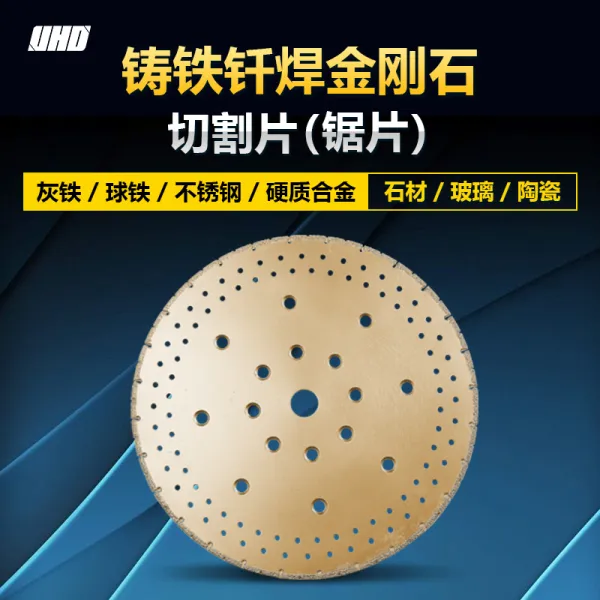
You’re not just using a tool—you’re managing a precision instrument that directly impacts productivity, safety, and cost control on your job site. Whether you're operating in construction, stone fabrication, or municipal infrastructure, proper maintenance of brazed diamond saw blades is no longer optional—it’s essential.
A recent survey by the International Stone Association found that 43% of blade failures are caused by improper handling or lack of routine checks. That’s not just downtime—it’s risk. For example:
Here’s what you should do daily before and after use:
| Action | Frequency | Key Benefit |
|---|---|---|
| Clean debris with compressed air | After each shift | Prevents clogging, maintains cutting edge sharpness |
| Inspect for cracks or chipping | Before every use | Avoids catastrophic breakage mid-cut |
| Check coolant flow rate | Every 2 hours | Reduces heat buildup by 40–60% |
“According to ISO 13710-2:2021, regular inspection intervals must be documented—not just performed.” — *Global Industrial Safety Standards Manual*
If your blade starts vibrating more than usual—or if you hear a high-pitched whine—it’s time to act. These aren’t just nuisances—they’re early warnings of:
One contractor in Dubai reported saving over $12,000/year in blade replacements after implementing a weekly vibration check using a handheld sensor. Sound familiar?
Have you noticed abnormal vibrations in your saw blade lately? If yes, it might be time for a deeper look—or a quick call to support.
Store blades vertically in dry, climate-controlled areas (ideally 10–25°C). Never stack them directly on top of each other—use anti-rust paper between layers. This simple step prevents warping and ensures consistent performance when reused.
At UHD Superhard, we don’t just sell blades—we build trust through real-world expertise. Our global technical team provides on-demand guidance via video call or live chat, ensuring every blade performs as intended, whether you're in Germany, Saudi Arabia, or Brazil.
Get Your Free Maintenance Checklist + Live Support Access





.png?x-oss-process=image/resize,h_600,m_lfit/format,webp)


.png?x-oss-process=image/resize,h_600,m_lfit/format,webp)