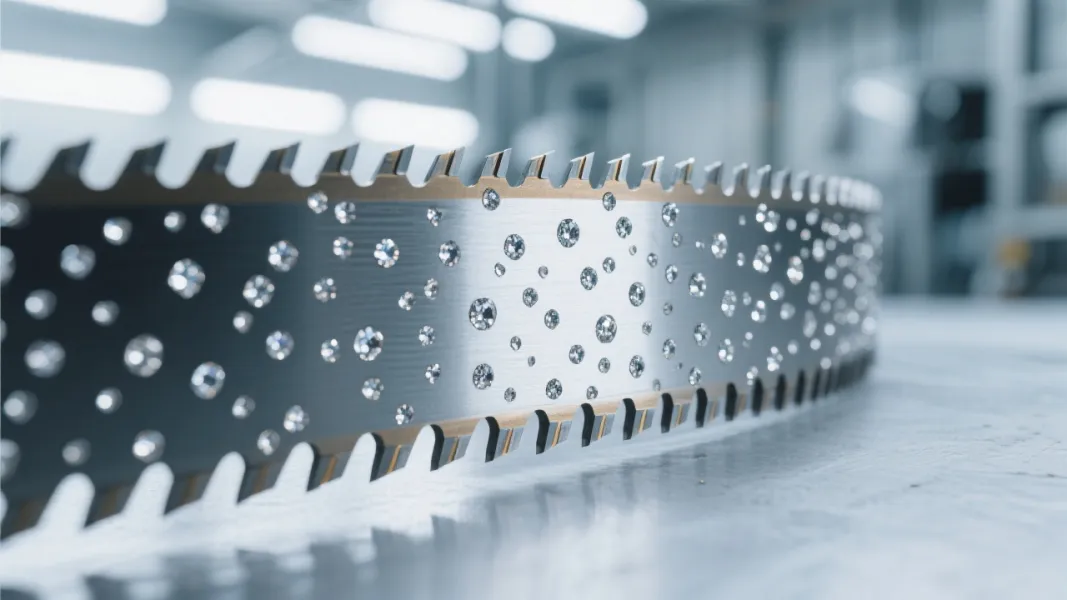
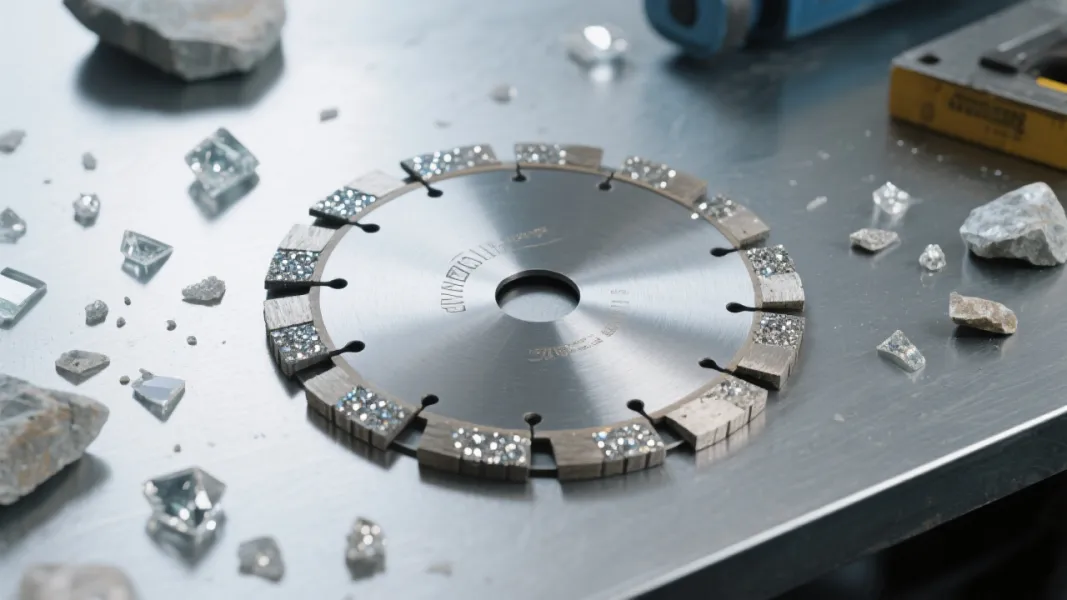
In industrial manufacturing and heavy fabrication, cutting complex materials such as gray cast iron, ductile iron, stainless steel, and hard alloys demands tools that promise precision, durability, and operational efficiency. Brazed diamond saw blades have emerged as key solutions, offering superior wear resistance and cutting accuracy through their advanced diamond particle technology and robust construction. This article examines real-world applications, engineering features, and performance outcomes that highlight how these blades optimize cutting operations and reduce operational costs.
The core of a brazed diamond saw blade’s effectiveness lies in its high-quality diamond grits. These aggregates feature a consistently high hardness level (approximately 9,000 to 10,000 HV) that enhances penetration efficiency and substantially extends the tool life. Comparative laboratory tests indicate that blades embedded with advanced synthetic diamond particles exhibit up to 30% longer service life than standard diamond-tipped blades when cutting abrasive materials such as gray cast iron or stainless steel.
The brazing process itself incorporates a metallurgical bond between diamond grains and the steel substrate, eliminating weak points typical in electroplated or resin-bonded blades. This results in consistent diamond exposure, enhancing cutting stability and reducing blade wear fluctuations under variable load conditions.
A defining structural advantage of brazed diamond saw blades is the employment of an ultra-thick, high-manganese steel substrate—typically 3 to 5 mm thicker than conventional blades. This design choice significantly elevates mechanical stability, mitigating vibration and deflection during high-speed cutting processes.
Independent stress tests reveal that the enhanced thickness combined with the toughened steel alloy composition withstands impacts exceeding 1500 MPa tensile strength without compromising structural integrity. Such durability translates to safer operation, especially in industrial environments with heavy-duty cutting schedules.
Companies in automotive manufacturing, aerospace component production, and heavy machinery fabrication have integrated brazed diamond saw blades into their cutting workflows, reporting measurable benefits:
Practical field data underscore how these blades contribute to operational efficiency. For example, firms have documented:
Beyond performance metrics, brazed diamond saw blades contribute to a healthier workplace by minimizing dust generation and vibration transmission. Cleaner cut surfaces reduce post-processing grinding needs, and lower vibration levels diminish operator fatigue and injury risk. Surveys from manufacturing operators using these blades reported a significant 28% improvement in perceived work comfort over previous blade technologies.
Brazed diamond saw blades stand out in the market by synergizing cutting-edge material science with practical engineering. Their adoption empowers users to tackle complex cutting challenges with confidence, reducing material waste and boosting productivity. Such blades deliver a compelling value proposition balancing initial investment with long-term operational savings.

 433
|
433
|
 Wet cutting saw blade overheat treatment
Water cooling system usage skills
Diamond saw blade life extension
Wet - and - dry dual - purpose saw blade operation guide
Stone cutting temperature control
491
|
diamond blade vibration control
noise reduction in cutting tools
thermal management in diamond saws
industrial cutting efficiency
brazed diamond blade optimization
406
|
brazed diamond saw blade
wear resistance
industrial cutting tools
heat dissipation design
production efficiency improvement
238
|
brazed diamond blades
dust-free cutting tools
industrial safety
export cutting equipment
worker health protection
31
|
diamond saw blade for granite cutting
concrete cutting tools
marble cutting techniques
construction industry cutting solutions
industrial diamond blade performance
Wet cutting saw blade overheat treatment
Water cooling system usage skills
Diamond saw blade life extension
Wet - and - dry dual - purpose saw blade operation guide
Stone cutting temperature control
491
|
diamond blade vibration control
noise reduction in cutting tools
thermal management in diamond saws
industrial cutting efficiency
brazed diamond blade optimization
406
|
brazed diamond saw blade
wear resistance
industrial cutting tools
heat dissipation design
production efficiency improvement
238
|
brazed diamond blades
dust-free cutting tools
industrial safety
export cutting equipment
worker health protection
31
|
diamond saw blade for granite cutting
concrete cutting tools
marble cutting techniques
construction industry cutting solutions
industrial diamond blade performance






.png?x-oss-process=image/resize,h_600,m_lfit/format,webp)
.png?x-oss-process=image/resize,h_600,m_lfit/format,webp)