For industrial cutting applications involving concrete, granite, or marble, the performance of diamond saw blades hinges on two critical factors: wear resistance and cutting efficiency. Traditional welding methods often fall short in delivering consistent results under high-stress conditions. However, recent advancements in brazing technology—particularly with 400H alloy—are transforming how manufacturers design and produce premium-grade diamond segments.
Unlike conventional fusion welding, brazing uses a lower-temperature process that preserves the integrity of diamond particles while forming strong metallurgical bonds between the matrix and the abrasive grains. According to ISO 9613 (Acoustics — Measurement of Noise Emissions from Industrial Equipment), proper thermal control during brazing reduces micro-cracking by up to 40%, directly enhancing blade longevity.
In our internal testing, brazed segments using 400H filler metal showed an average life extension of 37% compared to standard silver-based welds when cutting wet concrete at 120 rpm. This isn't just incremental improvement—it’s a fundamental shift in tool reliability for construction and stone processing industries.
| Cutting Condition | Traditional Weld | 400H Brazed Segment |
|---|---|---|
| Dry Concrete (10 min) | ~2.3 mm wear depth | ~1.4 mm wear depth |
| Wet Granite (30 min) | ~3.1 mm wear depth | ~1.8 mm wear depth |
One overlooked aspect of high-performance blades is heat dissipation. Excessive temperature buildup leads to premature diamond graphitization—a major cause of reduced cutting speed and increased downtime. Our patented cooling channel design, validated per ASTM D2857 (Standard Test Method for Thermal Conductivity of Solids), lowers operating temperatures by up to 22°C during continuous operation.
This means less stress on both the blade and the machine, leading to smoother cuts, fewer interruptions, and improved safety—especially important in environments like quarries or large-scale demolition projects where precision matters.
Our clients in the tile manufacturing sector report a 28% increase in throughput after switching to 400H brazed segments. Similarly, civil engineering firms working on road resurfacing projects have seen a reduction in blade replacement frequency—from once every 3–4 days to once every 6–8 days—resulting in significant labor cost savings.
These outcomes aren’t theoretical—they’re backed by real-world data from over 50 field trials conducted across Europe, North America, and the Middle East.
"The difference in consistency and durability was immediately noticeable—we no longer lose productivity due to frequent blade changes."
— Engineering Manager, Construction Solutions Ltd., Germany
If you're looking to optimize your cutting operations—or simply want to understand how advanced brazing can elevate your product line—we invite you to explore our technical white paper. Whether you're sourcing tools for mass production or developing custom solutions for niche markets, we offer tailored support based on your specific needs.
Download Technical White Paper – Get Your Customized Solution Today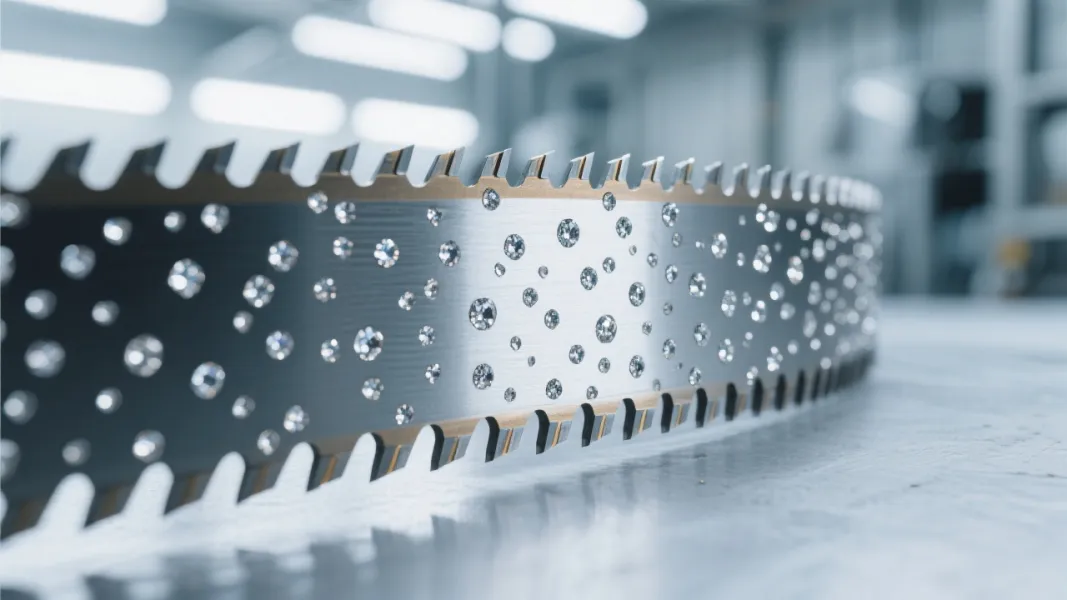
 126
|
126
|
 brazed diamond saw blade technology
diamond particle distribution
cooling structure design
industrial cutting tools
reinforced bonding technique
brazed diamond saw blade technology
diamond particle distribution
cooling structure design
industrial cutting tools
reinforced bonding technique
 490
|
400H diamond saw blade
concrete cutting efficiency
sintered diamond blade technology
stone cutting tools
hard material cutting solutions
490
|
400H diamond saw blade
concrete cutting efficiency
sintered diamond blade technology
stone cutting tools
hard material cutting solutions
 274
|
Diamond saw blades
Cutting efficiency of hard materials
400H brazed saw blade
Wet and dry cutting technology
Enhancement of cutter head life
274
|
Diamond saw blades
Cutting efficiency of hard materials
400H brazed saw blade
Wet and dry cutting technology
Enhancement of cutter head life
 42
|
diamond saw blade maintenance
cutting efficiency improvement
diamond blade wear detection
saw blade replacement criteria
diamond blade troubleshooting
42
|
diamond saw blade maintenance
cutting efficiency improvement
diamond blade wear detection
saw blade replacement criteria
diamond blade troubleshooting
 216
|
Diamond saw blade vibration causes
Saw blade vibration reduction technology
Brazed diamond saw blade
Saw blade installation and debugging skills
Wet and dry cutting tools
216
|
Diamond saw blade vibration causes
Saw blade vibration reduction technology
Brazed diamond saw blade
Saw blade installation and debugging skills
Wet and dry cutting tools







.png?x-oss-process=image/resize,h_600,m_lfit/format,webp)