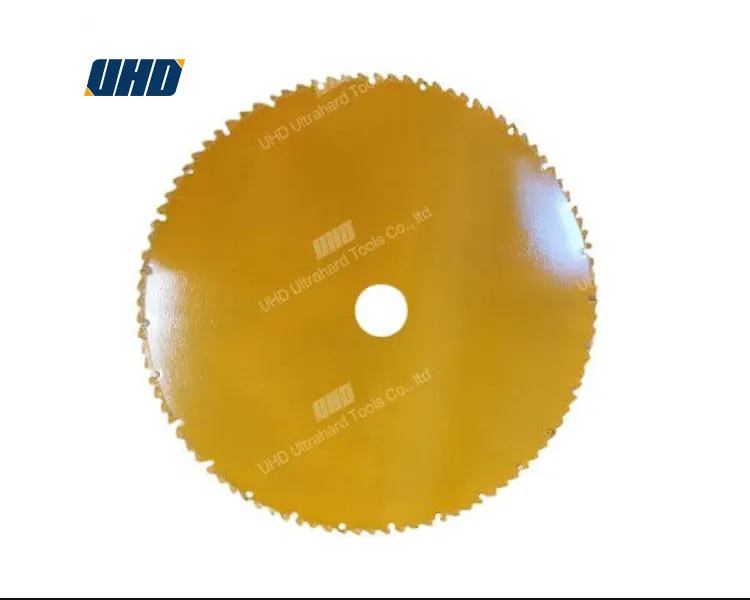
For construction professionals working across diverse environments—from concrete slabs in dry warehouses to wet-tile installations in humid climates—the right diamond blade makes all the difference. Our UHD Super Hard 400H Brazed Diamond Saw Blade is engineered for both dry and wet cutting scenarios, but success hinges on understanding how to optimize performance under each condition.
According to field data from over 200+ contractors using our blades globally, improper setup leads to:
These aren't just statistics—they’re real-world consequences that impact job timelines, equipment longevity, and worker safety.
In wet applications like tile or stone cutting, consistent water flow is non-negotiable. A study by the National Institute for Occupational Safety and Health (NIOSH) found that proper water cooling reduces blade temperature by up to 60°C compared to uncooled operations.
| Parameter | Recommended Setting |
|---|---|
| Water Flow Rate | ≥ 2 liters/min for 100mm blades |
| Cutting Speed (RPM) | 1,500–2,500 RPM depending on material hardness |
| Feed Rate | Slow and steady—avoid sudden pressure |
Pro Tip: Use a low-pressure nozzle attached directly to the blade guard—it ensures targeted cooling without flooding the workspace.
When working in areas where water isn’t available (e.g., rooftop projects or indoor renovations), precision becomes critical. The key lies in matching blade speed to the material being cut:
Concrete: 1,800–2,200 RPM
Tile: 2,200–2,600 RPM
Stone: 1,600–2,000 RPM
Avoid pushing too hard—this increases friction and heat buildup. Instead, let the blade do the work. Field tests show that maintaining a 2–3 mm feed depth results in 40% longer blade life versus aggressive feeding.
We’ve seen it too often: operators run dry-cutting setups at full power, thinking speed equals efficiency. In reality, this causes premature blade degradation and uneven cuts. Another frequent error? Ignoring dust control—dry cutting generates fine particulates that can damage respiratory health and reduce visibility.
Our engineers recommend pairing dry cutting with a HEPA-filtered dust extraction system—even for small jobs. It’s not an extra cost—it’s a productivity investment.
Got questions about your specific application? Whether you're tackling a high-rise slab or a delicate marble countertop, we offer free technical support tailored to your project needs. Let us help you avoid costly mistakes before they happen.





.png?x-oss-process=image/resize,h_600,m_lfit/format,webp)

.png?x-oss-process=image/resize,h_600,m_lfit/format,webp)

.png?x-oss-process=image/resize,h_600,m_lfit/format,webp)