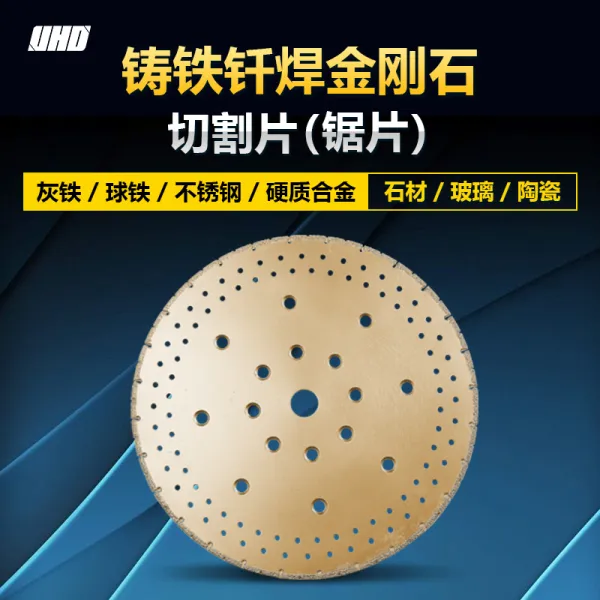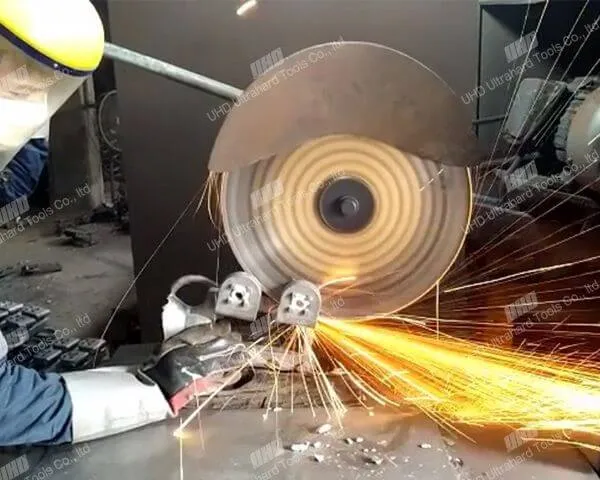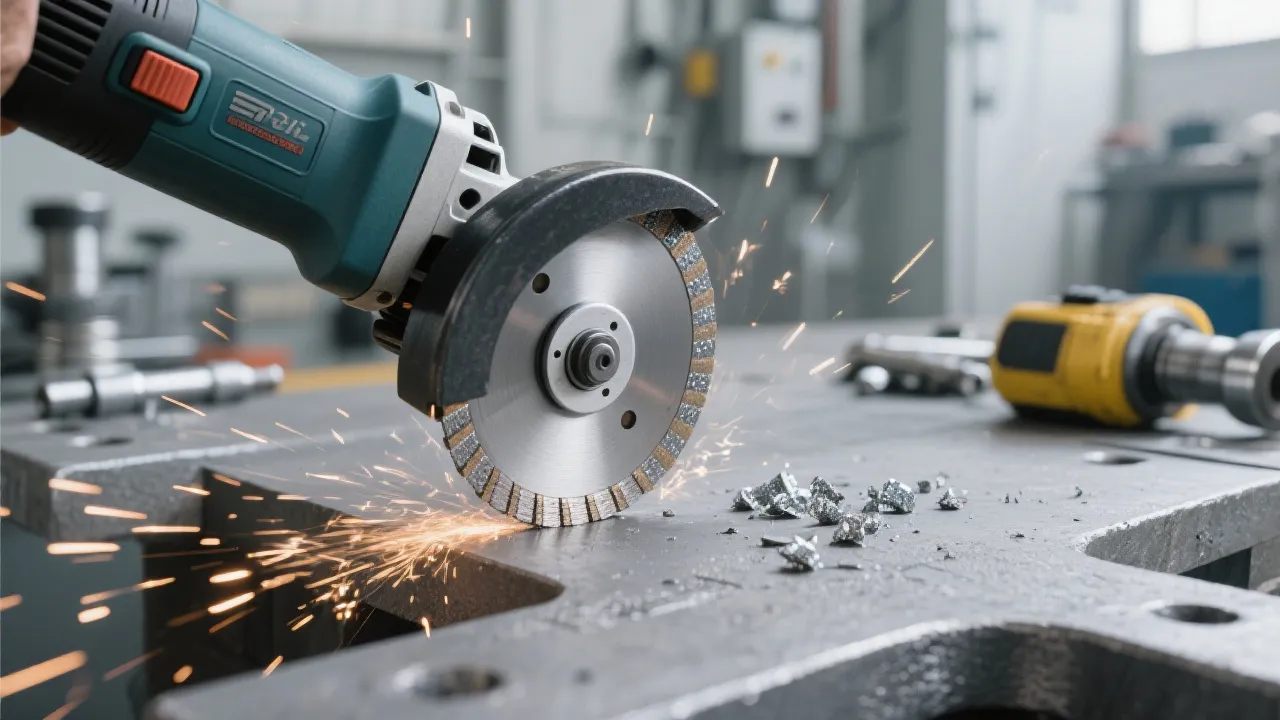
In real-world cutting of porcelain tile, marble, and granite, the “noise” operators complain about is rarely just sound—it’s often a measurable vibration signature that affects edge quality, tool life, and fatigue. High-frequency resonance in rigid stone saw blades typically comes from a tight coupling of thermal stress, uneven stiffness, and imperfect dynamic balance. The good news: layout decisions—especially how heat-dissipation slots are distributed—can shift resonance peaks and damp harmful modes without sacrificing cutting efficiency.
High-frequency vibration is often misdiagnosed as “machine issues,” but blades can become the dominant vibration source when cutting hard, brittle materials. Granite and porcelain generate intermittent cutting forces (micro-chipping, grain boundary fracture, glaze-layer breakout) that act like repeated impulses. When the impulse frequency aligns with the blade’s natural modes, resonance appears: increased audible pitch, a shaky feel at the feed handle, and visible waviness on cut edges.
In many field measurements on medium-size stone blades (300–450 mm), problematic resonance peaks often show up in the 700–1,800 Hz range, depending on core thickness, slot design, and RPM. Even a small shift of resonance away from the forcing band—combined with better damping—can make the difference between smooth cutting and repeated rework.
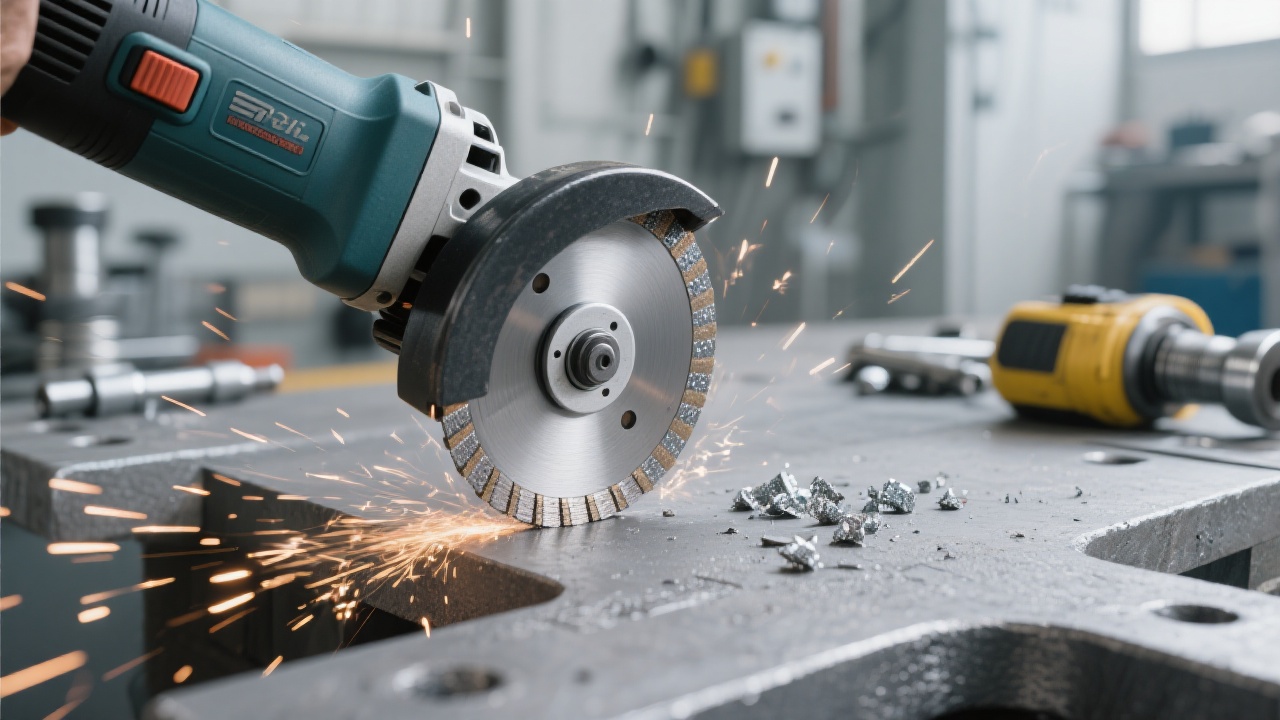
Heat-dissipation slots (often called “cooling slots” or “relief slots”) are commonly explained as a thermal feature. In practice, they do three things at once: they guide heat flow, redistribute residual stress, and reshape the blade core’s stiffness map. That stiffness map determines which mode shapes dominate at operating RPM.
A slot pattern that is too symmetric and too “stiffly uniform” can concentrate energy into a narrow resonance band. Conversely, a thoughtfully staggered layout spreads modal energy and can lower peak amplitude. For hard stone cutting, engineers often aim to reduce sharp resonance peaks (high Q-factor) rather than chasing a single “perfect” frequency.
Slot count & spacing: More slots can improve thermal relief but may reduce core stiffness. Non-uniform spacing can break harmonic reinforcement.
Slot length & end geometry: Rounded ends reduce stress concentration. Sharp corners can seed micro-cracks and amplify local vibration.
Radial position: Slots closer to the rim affect rim flexibility and chip evacuation; closer to the mid-core shifts bending modes.
Companion damping features: Copper/laser-damping inserts or resin-filled slots can increase energy dissipation and reduce peak vibration amplitude.
In controlled tests on stone cutting applications, a refined slot layout combined with damping features can reduce peak vibration amplitude by roughly 15–35% at the dominant resonance band, with edge chipping reductions often observed in the 10–25% range (depending on material brittleness, coolant, and feed consistency).
Slot layout alone cannot guarantee stability. Two blades with the same visible pattern can behave differently if their core stiffness and balance are off. In hard stone cutting, vibration is often the result of a three-way interaction: forcing (cutting impulses) + structure (core stiffness) + rotation (imbalance).
Increasing core thickness or using a higher modulus steel can raise natural frequencies, but excessive stiffness can also transmit more force into the machine and reduce forgiveness on brittle tile edges. Many manufacturers tune stiffness locally—reinforcing certain annular zones—so that the blade does not “ring” at the RPM bands commonly used in stone shops (for example, 3,000–6,000 RPM depending on diameter and machine type).
Dynamic imbalance produces periodic excitation at 1× rotational frequency and its harmonics. That energy can couple into higher modes through the machine structure and clamping stack. In practice, professional-grade blades are often balanced to G2.5–G6.3 levels (ISO-style balancing references), and a minor flange contamination can undo it. If an operator feels vibration even in air-cut (no material contact), imbalance or mounting is the first place to look.
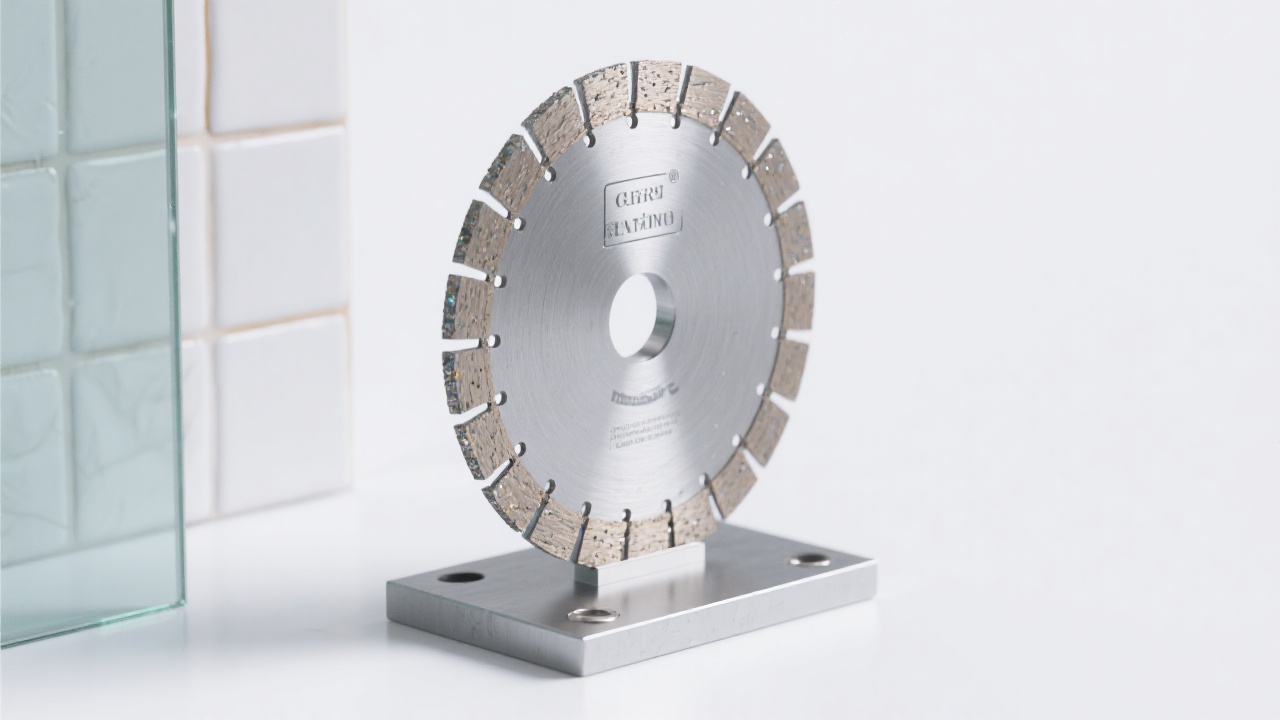
In one typical workshop scenario, operators report a stable cut on 15 mm marble but experience a sudden “buzzing” and corner breakout on 10–12 mm porcelain tile. The machine and blade are unchanged; the difference lies in the forcing pattern. Porcelain tends to generate sharper, higher-frequency impulses due to its dense, brittle structure and glaze layer behavior.
| Metric | Baseline Setup | Optimized Setup | Typical Improvement |
|---|---|---|---|
| Peak vibration (dominant band) | 0.28–0.35 g | 0.18–0.26 g | 15–35% |
| Edge chipping rate (visual QC rejects) | 6–10% | 4–7% | 10–25% |
| Operator-reported comfort (1–5) | 2.6–3.1 | 3.6–4.2 | +0.8–1.2 |
| Core temperature near rim (steady cut) | 85–110°C | 70–95°C | 10–20°C lower |
Note: values vary with blade diameter, RPM, coolant type/flow, and stone hardness. Numbers above represent common ranges observed in mid-duty workshop conditions.
The optimized setup typically combines: (a) a slot layout that relieves thermal stress at the rim without over-softening the core, (b) verified flange cleanliness and proper torque, and (c) a feed strategy that avoids exciting the blade’s sensitive RPM band.
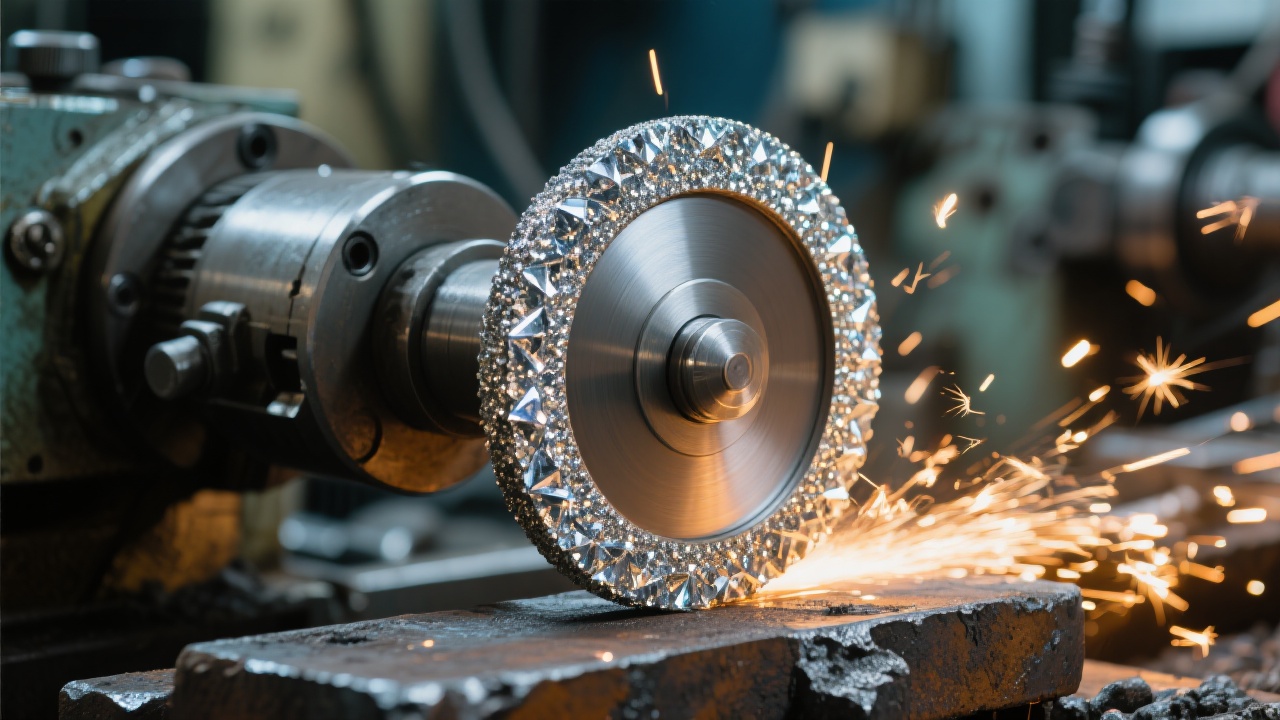
Many teams respond to vibration by slowing down. That sometimes helps, but sometimes it increases rubbing and heat, which shifts stress and makes resonance more likely. A practical approach is to test small feed changes while watching for the “quiet band” where the blade feels stable. In tile cutting, micro-pauses during entry/exit can also reduce edge breakout by preventing impulse stacking.
Even a high-quality blade cannot compensate for dirty or mismatched flanges. A thin layer of stone slurry can create runout and induce periodic excitation. Good practice is to clean the contact surfaces, verify flange flatness, and avoid over-tightening that distorts the core. If the machine allows, checking lateral runout and aiming for ≤ 0.10 mm is a realistic workshop target.
Intermittent coolant delivery (clogged nozzles, fluctuating pressure) creates temperature cycling. That cycling changes local stiffness and can make a stable blade unstable mid-shift. For wet cutting, many shops find a stable range around 2–6 L/min for mid-size saws, focusing less on “maximum flow” and more on consistent targeting at the entry zone.
For teams comparing hard stone cutting blades across porcelain, marble, and granite jobs, the most practical evaluation order is: mounting stability (runout, flange condition), then coolant consistency, then blade structural design (slot layout, damping features, core stiffness). This sequence avoids “design blame” when the real issue is installation or thermal cycling.
Explore engineering notes on hard stone cutting saw blades—including slot pattern concepts, stiffness tuning, and resonance-aware setup recommendations.
See the Hard Stone Cutting Saw Blade Vibration-Control GuideTip: bring your blade diameter, RPM range, material type, and coolant method for a faster technical match.

 354
|
354
|
 brazed diamond blade
granite cutting temperature control
CE certification diamond saw blade
industrial hard material cutting
diamond blade cooling technology
428
|
diamond saw blade brazing
enhanced diamond bonding technology
wear-resistant cutting tools
high-efficiency diamond blade
industrial blade cooling design
brazed diamond blade
granite cutting temperature control
CE certification diamond saw blade
industrial hard material cutting
diamond blade cooling technology
428
|
diamond saw blade brazing
enhanced diamond bonding technology
wear-resistant cutting tools
high-efficiency diamond blade
industrial blade cooling design
 207
|
diamond saw blade replacement criteria
400H brazed diamond blade maintenance
cutting efficiency decline signs
saw blade failure diagnosis
industrial blade inspection checklist
265
|
400mm brazed diamond saw blade
diamond blade cutting efficiency
hard material cutting solution
industrial saw blade performance
multilingual technical support
216
|
Diamond saw blade vibration causes
Saw blade vibration reduction technology
Brazed diamond saw blade
Saw blade installation and debugging skills
Wet and dry cutting tools
207
|
diamond saw blade replacement criteria
400H brazed diamond blade maintenance
cutting efficiency decline signs
saw blade failure diagnosis
industrial blade inspection checklist
265
|
400mm brazed diamond saw blade
diamond blade cutting efficiency
hard material cutting solution
industrial saw blade performance
multilingual technical support
216
|
Diamond saw blade vibration causes
Saw blade vibration reduction technology
Brazed diamond saw blade
Saw blade installation and debugging skills
Wet and dry cutting tools






.png?x-oss-process=image/resize,h_600,m_lfit/format,webp)
.png?x-oss-process=image/resize,h_600,m_lfit/format,webp)
.png?x-oss-process=image/resize,h_600,m_lfit/format,webp)
.png?x-oss-process=image/resize,h_600,m_lfit/format,webp)