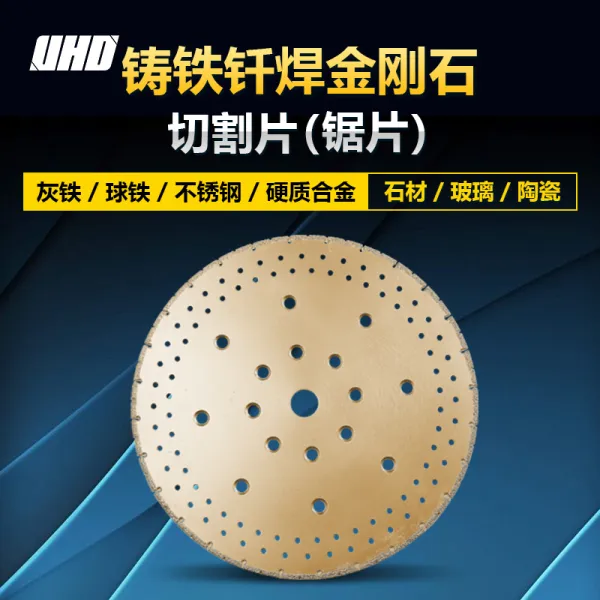
As an overseas industrial user, you may have encountered situations where your saw blade vibrates abnormally during operation. This seemingly minor issue can have a significant impact on both the cutting quality and equipment safety. Abnormal vibration can lead to rough cuts, reducing the precision of your workpieces by up to 30%. Moreover, it can cause premature wear and tear on the saw blade and other components of the cutting equipment, shortening the equipment's lifespan by an average of 20 - 30%. In extreme cases, it may even pose a safety risk to operators.
Mechanical balance is crucial for reducing saw blade vibration. A well - balanced saw blade distributes the cutting forces evenly, minimizing the centrifugal forces that cause vibration. For example, if the saw blade is off - balance, it can generate vibrations with an amplitude of up to 0.5 mm, which is enough to affect the cutting quality. By ensuring proper mechanical balance, we can reduce this amplitude to less than 0.1 mm.
The tooth profile of a saw blade also plays an important role in vibration reduction. An optimized tooth profile can improve the cutting efficiency and reduce the resistance during cutting. For instance, a well - designed tooth profile can reduce the cutting force by 15 - 20%, thereby reducing the vibration caused by uneven cutting forces.
The overall rigidity of the saw blade affects its ability to resist deformation during cutting. A saw blade with high rigidity can maintain its shape better under cutting forces, reducing vibration. A saw blade with insufficient rigidity may deform under pressure, leading to increased vibration. By improving the overall rigidity, we can enhance the saw blade's stability and reduce vibration.
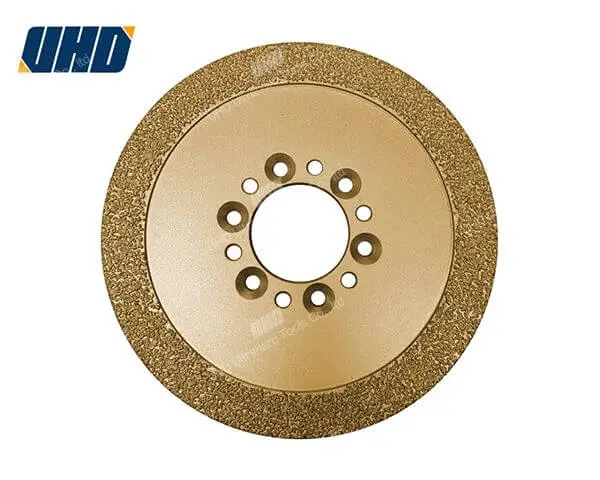
The brazing process is a key factor in ensuring the uniformity and stability of the saw blade. High - quality brazing technology can firmly bond the diamond segments to the saw blade body, ensuring even distribution of the segments. This even distribution is essential for maintaining the dynamic balance of the saw blade. For example, in the case of the Youde 400H brazed diamond saw blade, the advanced brazing process ensures that the diamond segments are evenly spaced, reducing the vibration caused by uneven mass distribution. It can improve the saw blade's dynamic balance by up to 40%, significantly enhancing its stability during operation.
When you encounter vibration problems during saw blade operation, you can use the following methods for diagnosis. First, check the fixture fastening. Loose fixtures can cause the saw blade to move during operation, leading to vibration. You can use a torque wrench to ensure that the fixtures are tightened to the specified torque. Second, calibrate the spindle run - out. Excessive spindle run - out can also cause vibration. You can use a dial indicator to measure the spindle run - out and adjust it to within the allowable range, usually less than 0.05 mm.
The Youde 400H saw blade combines advanced brazing technology, optimized tooth profile design, and high - quality materials to provide excellent vibration reduction performance. It can significantly improve the cutting precision, extend the equipment lifespan, and ensure the safety of operators. Have you ever encountered similar vibration problems with your saw blades? If so, the Youde 400H saw blade may be the solution you need.





.png?x-oss-process=image/resize,h_600,m_lfit/format,webp)

.png?x-oss-process=image/resize,h_600,m_lfit/format,webp)