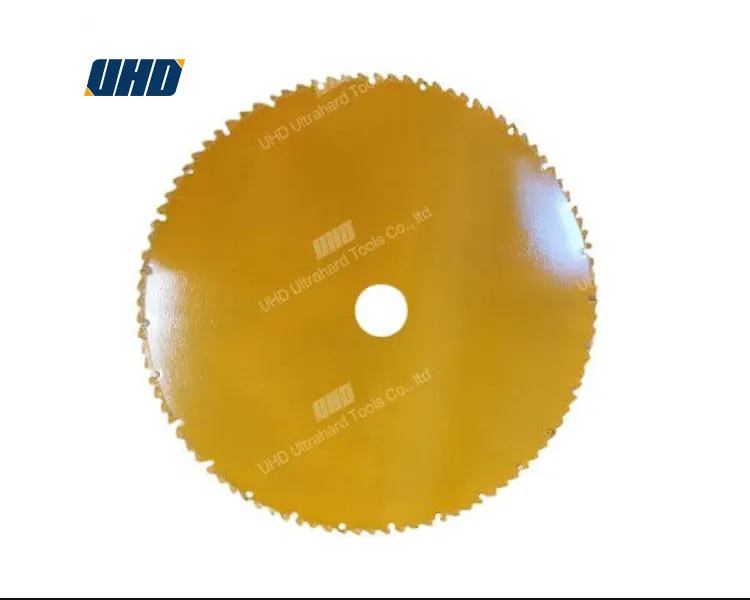
As a professional in stone processing, you understand the critical role cutting methods play in overall productivity and tool longevity. The choice between dry and wet cutting isn't merely a preference—it affects blade performance, material quality, and operational safety. Today, we delve into how the UHD Super-Hard 400H Brazed Diamond Blade excels in both environments, allowing you to achieve precise, efficient cuts on various stone types such as marble, granite, and engineered quartz.
Dry cutting involves operating the blade without external cooling, relying on air to dissipate heat. This method offers faster setup and more convenience in mobile or constrained environments but introduces challenges such as higher blade temperatures, increased wear, dust generation, and potential thermal damage to both blade and stone.
Wet cutting, on the other hand, uses water or coolant to manage blade temperature, reduce dust, and improve cut quality. It generally extends blade life by up to 30% through effective heat dissipation and lowers vibration—a crucial factor for increasing cut precision.
| Aspect | Dry Cutting | Wet Cutting |
|---|---|---|
| Cooling Method | Air cooling (no water) | Water coolant applied |
| Blade Temperature | Higher heat buildup | Lower heat, stable temps |
| Dust & Debris | More dust generated | Dust suppression via water |
| Precision & Finish | Higher vibration risk | Cleaner, smoother cuts |
| Blade Life Expectancy | Baseline durability | Up to 30% longer life |
The UHD 400H blade leverages a combination of high-grade synthetic diamond grit and advanced brazing to ensure outstanding hardness and wear resistance. Its reinforced brazing technique creates a secure bond between diamond particles and the steel core, enabling the blade to withstand thermal stress inherent in dry cutting without segment detachment.
Additionally, the blade design incorporates an optimized segment structure that enhances airflow and cooling, reducing blade temperature spikes even in dry conditions. In wet cutting, the blade's channels facilitate water penetration for efficient cooling and debris removal, dramatically improving cutting speed and finish quality.
The result? A reliable multi-tasker that adapts to your workflow, letting every cut be smoother, sharper, and more cost-effective.
Different stones require tailored cutting parameters for optimal performance. Below are recommended speeds and feed rates for the UHD 400H blade:
| Material | Cutting Speed (m/s) | Feed Rate (mm/min) | Cooling Method |
|---|---|---|---|
| Marble (Natural Stone) | 28 - 32 m/s | 700 - 900 | Wet preferred, dry feasible with caution |
| Granite (Natural Stone) | 30 - 35 m/s | 600 - 800 | Wet strongly recommended |
| Engineered Quartz | 25 - 30 m/s | 650 - 850 | Wet essential to prevent resin melting |
To sustain peak performance and extend blade life, follow these key maintenance tips:
Common mistakes like trying ultra-high speed on hard granite in dry mode can drastically reduce blade lifespan —plan accordingly.
A recent field test conducted on a granite fabrication site showed the UHD 400H blade maintained stable cutting speeds around 33 m/s with wet cooling and sustained a 32% longer service life compared to competitor blades under similar conditions. Moreover, vibration monitoring recorded a 15% reduction, directly improving surface finish and operator comfort.
At another facility specializing in engineered quartz, switching to the UHD 400H blade with wet cutting protocols reduced resin edge chipping by over 40%, affirming the blade’s adaptability and precision.





.png?x-oss-process=image/resize,h_600,m_lfit/format,webp)

.png?x-oss-process=image/resize,h_600,m_lfit/format,webp)
.png?x-oss-process=image/resize,h_600,m_lfit/format,webp)