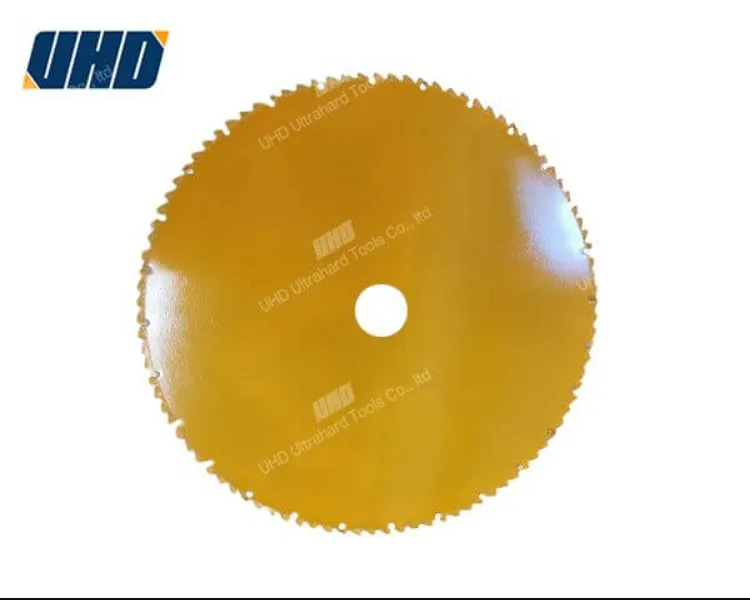
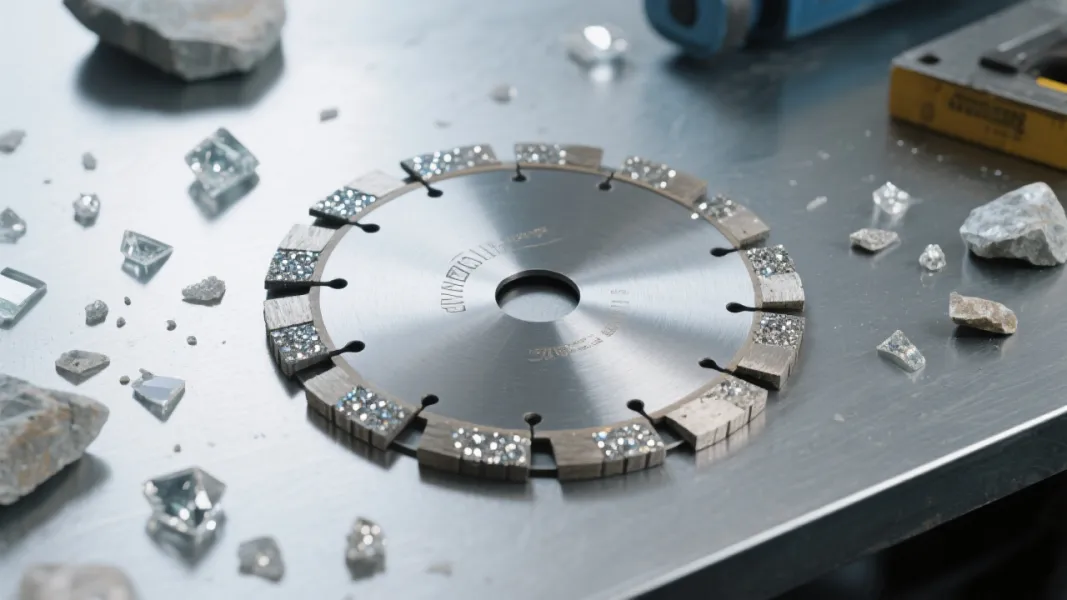
In the realm of industrial cutting, particularly with materials such as concrete and natural stone, the choice and maintenance of diamond saw blades play a pivotal role in operational success. The Youde Superhard 400H brazed diamond saw blade stands out for its adaptability across both wet and dry cutting conditions. Understanding the technical distinctions between these two methods, alongside key maintenance practices, can significantly elevate cutting efficiency while extending blade life.
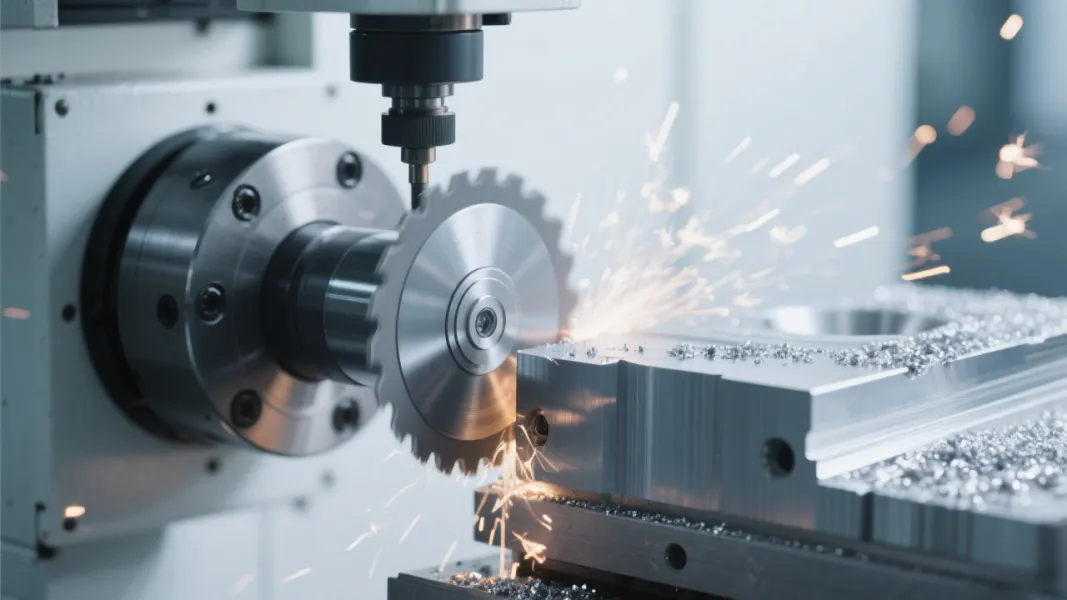
Wet cutting employs a continuous flow of water directly to the blade, promoting effective cooling and dust suppression. This method is highly efficient for cutting dense materials like granite and reinforced concrete. Conversely, dry cutting relies on the blade’s design to dissipate heat through air circulation and specialized cooling features such as heat-dispersing segments and vibration reduction technology.
Empirical tests reveal that wet cutting can reduce blade temperature by up to 30-40%, resulting in a 25% increase in blade lifespan compared to dry cutting under similar conditions. However, dry cutting offers greater mobility and ease of use in environments where water is scarce or poses logistical challenges.
The core advantage of wet cutting lies in its cooling mechanism. Without adequate cooling, diamond saw blades experience accelerated wear due to excessive friction heat, often resulting in segment laser weld degradation or premature bonding matrix failure. Water also suppresses airborne silica dust generated during cutting, which is a significant occupational hazard.
Dry cutting blades are engineered with enhanced segment spacing and slots that facilitate airflow and heat dispersion. The inclusion of vibration-reducing design mitigates operator fatigue and reduces mechanical stress on the blade body, preserving cutting accuracy.
For hard natural stones such as granite and marble, wet cutting is generally preferred due to intense thermal stress and dust generation. For tiles, ceramics, and lightweight concrete, dry cutting using appropriately designed blades can be efficiently deployed to improve job site flexibility.
Frequent missteps during operation significantly impair performance:
Routine maintenance should include:
On-site case studies document that adherence to wet cutting protocols combined with proactive Youde Superhard 400H blade maintenance improves average cutting rates by 15%, while extending operational life by nearly 20%. Incorporating vibration-reducing design also cuts operator strain and job downtime by approximately 10%, as reported in multiple large-scale stone fabrication projects.
To implement optimal cutting efficiency and safety, a standardized process incorporating the following steps is recommended:
Adherence to such systematic protocols ensures consistent cut quality, reduces unexpected downtime, and maximizes return on investment in premium diamond blades.
Discover how advanced wet and dry cutting technology can transform your concrete and stone processing projects. Tap into our comprehensive Product Technical Manual and learn proven strategies for maximizing efficiency and blade longevity.
Explore Youde 400H Cutting Solutions
 490
|
490
|
 400H diamond saw blade
concrete cutting efficiency
sintered diamond blade technology
stone cutting tools
hard material cutting solutions
400H diamond saw blade
concrete cutting efficiency
sintered diamond blade technology
stone cutting tools
hard material cutting solutions
 79
|
400mm brazed diamond saw blade
wear - resistant cutting tool
industrial - grade diamond saw blade
construction cutting solution
brazing technology advantage
211
|
Brazed diamond saw blade maintenance
Saw blade maintenance skills
Diamond saw blade heat dissipation management
Industrial cutting safety specifications
Saw blade service life extension
79
|
400mm brazed diamond saw blade
wear - resistant cutting tool
industrial - grade diamond saw blade
construction cutting solution
brazing technology advantage
211
|
Brazed diamond saw blade maintenance
Saw blade maintenance skills
Diamond saw blade heat dissipation management
Industrial cutting safety specifications
Saw blade service life extension
 346
|
Brazed diamond saw blade technology
ISO 9001 quality system
Wear - resistant cutting tools
Heat dissipation structure design
Industrial saw blade reliability
483
|
brazed diamond saw blade applications
400mm diamond saw blade cutting
hard material cutting technology
stone processing blade selection
construction material saw blade
346
|
Brazed diamond saw blade technology
ISO 9001 quality system
Wear - resistant cutting tools
Heat dissipation structure design
Industrial saw blade reliability
483
|
brazed diamond saw blade applications
400mm diamond saw blade cutting
hard material cutting technology
stone processing blade selection
construction material saw blade






.png?x-oss-process=image/resize,h_600,m_lfit/format,webp)
.png?x-oss-process=image/resize,h_600,m_lfit/format,webp)
.png?x-oss-process=image/resize,h_600,m_lfit/format,webp)