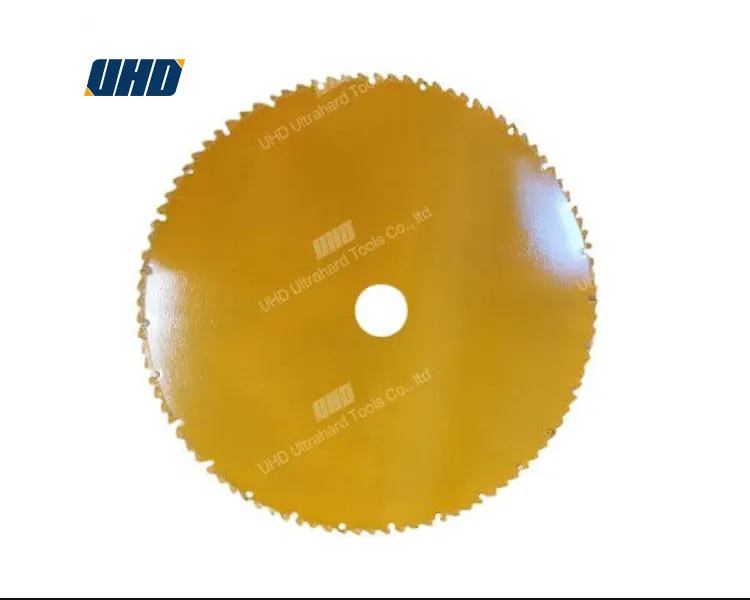
Have you ever wondered why your UHD Super Hard 400H Brazed Diamond Saw Blade doesn't perform consistently across different materials? The answer lies not in the product itself but in the way you operate it. In this article, we'll explore the key factors that affect the performance of your saw blade in wet and dry cutting scenarios, and provide you with a practical guide to optimizing its use.
The performance of your saw blade can vary significantly depending on whether you're using it in wet or dry cutting conditions. Wet cutting involves using water to cool the saw blade and reduce dust, while dry cutting relies on air circulation to dissipate heat. Each method has its own advantages and disadvantages, and understanding these differences is crucial for achieving optimal results.
Let's take a look at a real - world example. In a large - scale stone quarry project, a construction team was initially using dry cutting with the UHD Super Hard 400H saw blade on granite. They noticed that the saw blade was quickly showing signs of wear, with frequent cases of sintering and chipping. After switching to wet cutting with proper water cooling, the saw blade's performance improved significantly. The water effectively stabilized the temperature of the saw blade, reduced dust emissions, and extended the saw blade's lifespan.
Several key variables can have a profound impact on the performance of your saw blade, including rotational speed, feed rate, and cooling method. In wet cutting, the use of water as a coolant helps to maintain a stable temperature, which is essential for preventing overheating and extending the saw blade's life. For example, when cutting marble in a wet environment, a rotational speed of 2000 - 2500 RPM and a feed rate of 10 - 15 mm/min are generally recommended. The water also helps to flush away debris, reducing the risk of clogging and improving cutting accuracy.
In dry cutting, however, you need to be more cautious. High rotational speeds and excessive feed rates can lead to overheating, which may cause the saw blade to sinter or the diamond segments to chip. For dry cutting of concrete, it's advisable to keep the rotational speed between 1500 - 2000 RPM and the feed rate at 8 - 12 mm/min. Additionally, regular breaks should be taken to allow the saw blade to cool down, preventing damage due to excessive heat.
Here is a parameter adjustment list to help you optimize the performance of your saw blade in different cutting scenarios:
| Material | Cutting Method | Rotational Speed (RPM) | Feed Rate (mm/min) | Cooling Method |
|---|---|---|---|---|
| Stone | Wet | 2000 - 2500 | 10 - 15 | Water cooling |
| Concrete | Dry | 1500 - 2000 | 8 - 12 | Air circulation, regular breaks |
| Ceramics | Wet | 2200 - 2700 | 12 - 18 | Water cooling |
Many users make common mistakes when using saw blades, which can lead to poor performance and premature wear. One of the most common mistakes is increasing the rotational speed blindly in an attempt to speed up the cutting process. This can cause the saw blade to overheat, resulting in sintering and chipping. Another mistake is neglecting dust removal in dry cutting, which can lead to clogged saw blades and reduced cutting efficiency.
To avoid these mistakes, it's important to follow the recommended parameters and best practices. If you're using dry cutting, make sure to use a dust collection system to keep the work area clean. In both wet and dry cutting, avoid sudden changes in feed rate and rotational speed, as these can put unnecessary stress on the saw blade.
Expert Advice: "Always refer to the manufacturer's guidelines and adjust the parameters based on the specific material and cutting conditions. A little patience in parameter adjustment can go a long way in achieving efficient, accurate, and safe cutting."
By understanding the differences between wet and dry cutting, and by carefully adjusting the key variables such as rotational speed, feed rate, and cooling method, you can fully unleash the high - performance potential of your UHD Super Hard 400H Brazed Diamond Saw Blade. This will not only improve cutting efficiency but also ensure safety and extend the lifespan of your equipment.
If you want to learn more about how to achieve efficient, precise, and safe cutting with our high - quality saw blades, click here to explore our comprehensive solutions.
We encourage you to leave your questions and experiences in the comments section below. Our team of experts will be happy to assist you!





.png?x-oss-process=image/resize,h_600,m_lfit/format,webp)


.png?x-oss-process=image/resize,h_600,m_lfit/format,webp)